Monday, October 1, 2012

Benediction


        Trying, on my porch and for the third time, to boil water with a gracelessly aging camping stove, I go through my alternatives. Starving seems the easiest option effort wise, but the least desirable in other ways. I could also walk back into my village, I’m comfortable with the route now, and purchase quick calories from a vendor, but cookies and deep fried dough are only appetizing in moderation. Instead, I resign myself to sitting and reasoning out what could impede my simple goal: really hot water. My pot may be too large and thick; I could be attempting too much water; there may not be enough fuel; the stove’s heat could be too weak to handle any one or combination of the aforementioned. Devoted to making a simple dinner, I ignore the sound of small footfalls in my compound. An audible breath shakes me from absence and I turn to see a small child nearby. His clothes are stained with dirt, fresh or the kind that eventually fails to fade away, and he’s wrapped, just as I must have been, in the dusky leftovers of daylight.

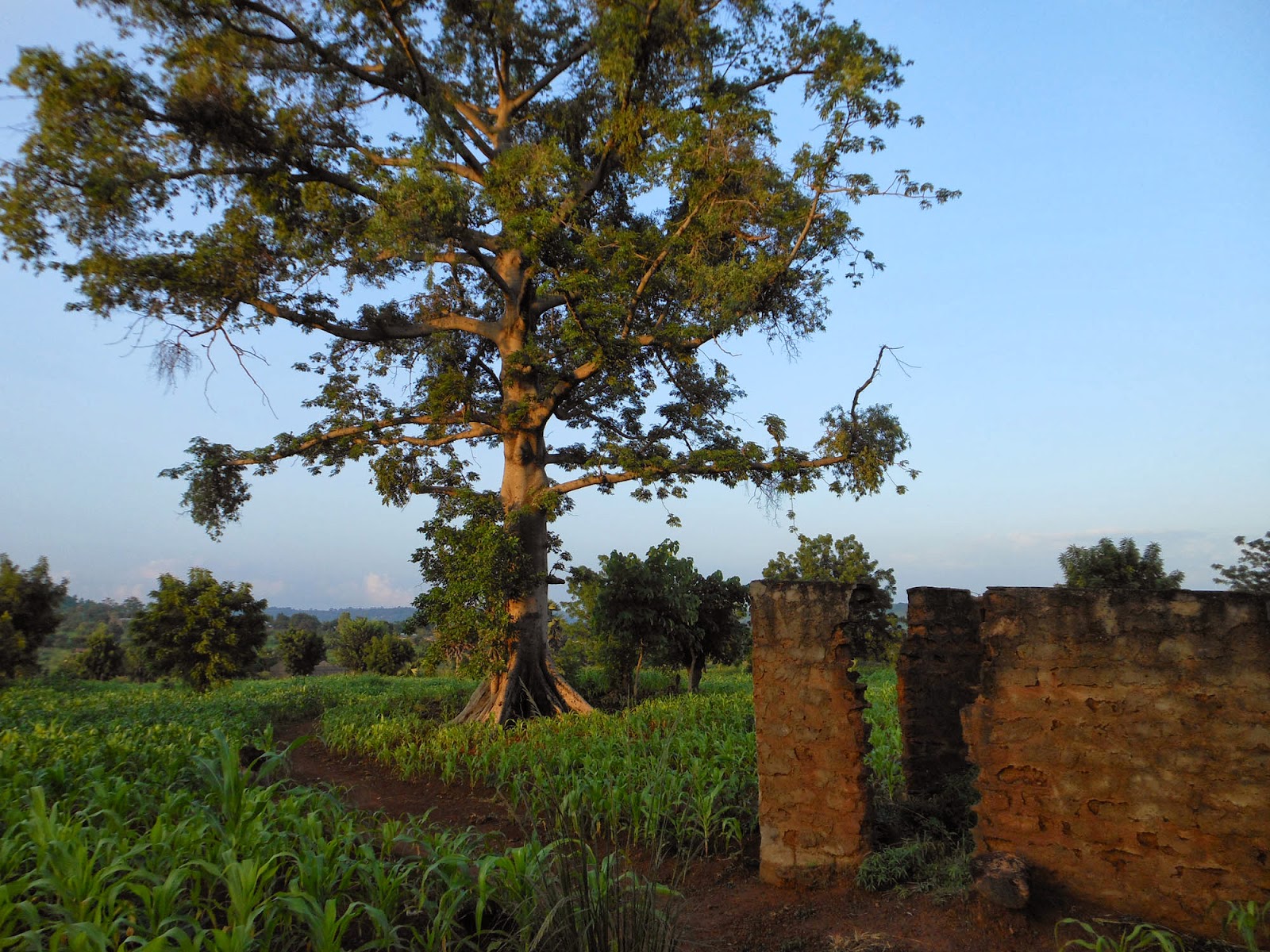
        “Bienvenue a Tandjouare!”,  my welcome party exclaimed, each member seated along the edge of the porch. Everyone there, from my work partner in the local NGO to a high school teacher, seemed eager and kind. Eating a delicious mixture of pate and green sauce with my new colleagues, I fumble through their questions and give a million “mercis”. My own questions, nervous, build and sit mentally: How long and how much have they been anticipating my arrival? What can I do to assist them and their (my?) community? Where can I get water? The previous few hours dropping off friends haven’t done my French any favors and I’m often distracted by a huge tree near my compound. Set against the stormy sky, it’s massive grey trunk and green splayed branches look as though they’re the essence of Tandjouare. As if all the corn and clearings around it, my house and the nearby compounds, the village and our impermanent lives, exist to make it that much grander by comparison. My fixation on the tree, attempts to listen, awkward responses, and the meal itself mélange until, breathing out, we hear rain against the tin roof. Then, like every coloring mixing to make white, verbal and mental silence. There is only the rain, the tree, and us, drenched by the clacks of a deluge deferred. After several minutes, the NGO’s director, a graying, older gentleman in white with a deep voice offset by still innocent eyes, explains that rain is a benediction and bodes well for my service. I thank him and smile, sincerely, with great hope.   

        Our eyes remain fixated on one another for several, prolonged seconds. He seems to be studying me before, slowly, dropping to one knee. His yellow gaze glistens as he asks, with the conviction one expects in church and private prayer, for money. I sit silently; giving it would be easy, kind, and, perhaps, offer temporary relief from the hardships in his life. He’s a silver screen in my head, and I readily project every starving African child ad from home. But, reality returns: I can give assistance, information, and connections, but I’m neither millionaire philanthropist nor voluntourist. He asks again; I respond that I don’t have money (while hoping that I can help his community). He asks again; I respond that I don’t have money (while hoping that, somehow, I can help him in the future).  He leaves, and I’m alone on the porch with an overused camping stove and barely boiling water. I imagine his perspective, with a white man from America, “the land of dreams”, suddenly living in a house next door. He’s preparing nice food, in nice clothes, with a personal stove. He can take hours, three times a day to sit, cook, and admire an old tree. He has family and friends somewhere with houses, cars, and bountiful food.

Wind rustles high leaves in the bluish twilight and I eat. A benediction. 

Saturday, September 29, 2012

Awake


        Sunlight streams through my purple pagne curtains as I try to rise. Streaking across the cold cement floor, it makes the mosquito net surrounding me glow like an afternoon shroud. Outside, amidst a gentle wind rustling the palm and teak trees, a chorus of voices begins building harmony. They start low, two or three unsure chanteuses breathing out, before reaching a symphony exalting their lord in ewe. African drums and handclaps join the chorus while I lay, post repo comatose. Save the “Amen!” conclusion, I understood nothing of their song. And yet, the purity, light, and love inspiring it bridged our void perfectly. I sometimes feel like I’m on vacation, acting a delusion far from my real life, but more days are starting to translate.
            
        Africa is similar and different from each expection I carried abroad. Most roads are unpaved and drivers / motorcyclists take close calls speeding past, though many wave or honk to greet pedestrians and each other. Trash collects in communal spaces, like a “Tragedy of the Commons” lesson piling to life, but smoke and smoldering embers mark where villagers have meticulously cleaned their compounds and lit the rubbish. The sun is high, hot, and unrelenting, but deep, ominous clouds block it almost daily with a seldom - kept promise of rain. In the same breath villagers yell “yovo”, the colloquial term for foreigner, some wish me “Bonne journee” with a wave and radiant smile. These situations keep my mind in a tug of war between wistfully romanticizing my American life and hopefully envisioning the African one. A floodgate’s been opened, and its deluge of promise, difficulty, dejection, and ambition shows no signs of slowing as the days wear / speed past. 
            
        Mornings and evenings begin and end early in Gbatope, a small village north of the national capital. When I’m collected enough to first leave my room, my family’s already swept our large compound and collected water. When I wander in for lunch, mentally full from the first round of lessons or lectures, my family’s often eaten, worked on the farm, and begun making manioc flour for the market. When dusk and I creep in every evening, my family is usually socializing after a full day. By the time I’m sweaty, spent, and fumbling through French notes, they’re relaxing with the radio. I sometimes wonder who’s condensed days would make a more fulfilling soup: theirs, rich in hearty work, community, and family ties, or mine, loaded with enriching information and the pursuit of heady notions like cross – cultural integration and trilingual thought.

“Thanks” is “merci” in French and “akpe” in ewe.
“How are you?” is “Comment allez vous?” and “Efwan?” respectively.

My host mother smiles at me in the lantern light as I eat dinner, present physically but lost in the darkness outside our straw payotte. I return the favor, hoping my gesture and glance translate.

“Ma yi mava” - “I will come back soon.” 

Monday, July 9, 2012

Aways


        Seven months pass by as I soar over indigo clouds obscuring the heartland. Days spent biking around a Mid-western metropolis and exploring a vibrant urban culture. Others engulfed by work in a renowned co – op with an amazing crew. I remember the nights I spent in, diligently studying or gorging myself on French cinema with a roommate, and those out, partying with friends and enjoying casual romance. For the many things that proved trying and stressful in that time, none of it matters now. Any rough edges of my Minneapolis have been glossed over, leaving nostalgia for an existence I’ll never know again. It came and went quickly, another place hurtling by at the speed of life. There’s no going back to then and there, only forward into the unknown.
       
        I knew scarcely a thing about Togo three months ago. Now, though far from encyclopedic, my knowledge has expanded greatly. It’s a relatively small West African nation, roughly fifty miles in width and two hundred in length, narrowly wedged between Benin to the East and Ghana to the West. Togo has a slight Atlantic coast known for its beauty and dangerous riptides, along which the capital Lome is located. Over six million people live in the country, encompassing more than forty ethnic groups, and the average life expectancy of a Togolese man is sixty. French is their official language, though many indigenous languages, such as Ewe and Kabiye, are commonly spoken. Economically, subsistence agriculture mixed with cash crops accounts for 42% of their gross domestic product.  Increasing development has allowed Togo to compete on the global market, but has also lead to food security issues within the country. Hopefully, that’s where I can help.
        
        The Peace Corps Togo Environmental Action and Food Security program aims to work with “individuals, organizations, and communities on agroforestry techniques, strategic planning, and environmental education.” Through these means, the project will ideally stem the depletion of forest reserve and ease the overuse of limited farmland, while still allowing farmers and communities to meet their needs. It seems like a daunting task, but one I’m thrilled to soon be involved with. I don’t know where I’ll fit into the EAFS program, just that my educational background and experience gave the Peace Corps hope that I could. And, with fifty years of working in Togo, I trust their judgment. 

        My father’s Kentucky home is adjacent to a huge lot featuring open, rolling hills and small patches of forest. Walking the dog there, with the countryside bathed in golden light, I struggle to imagine my life after boarding another plane tomorrow. Will Africa be anything like where I’ve been? Can I connect with another culture halfway across the world? What will I miss, as my family and friends continue in my absence? The answers are elusive as thunderclouds chase away our sunshine and the dog becomes anxious. Apparently impatient with my musings, she begins heading back to the house. I follow her through the woods as booming thunder and the wind between branches mark where we've been, the ghosts of a summer day that ended too soon.